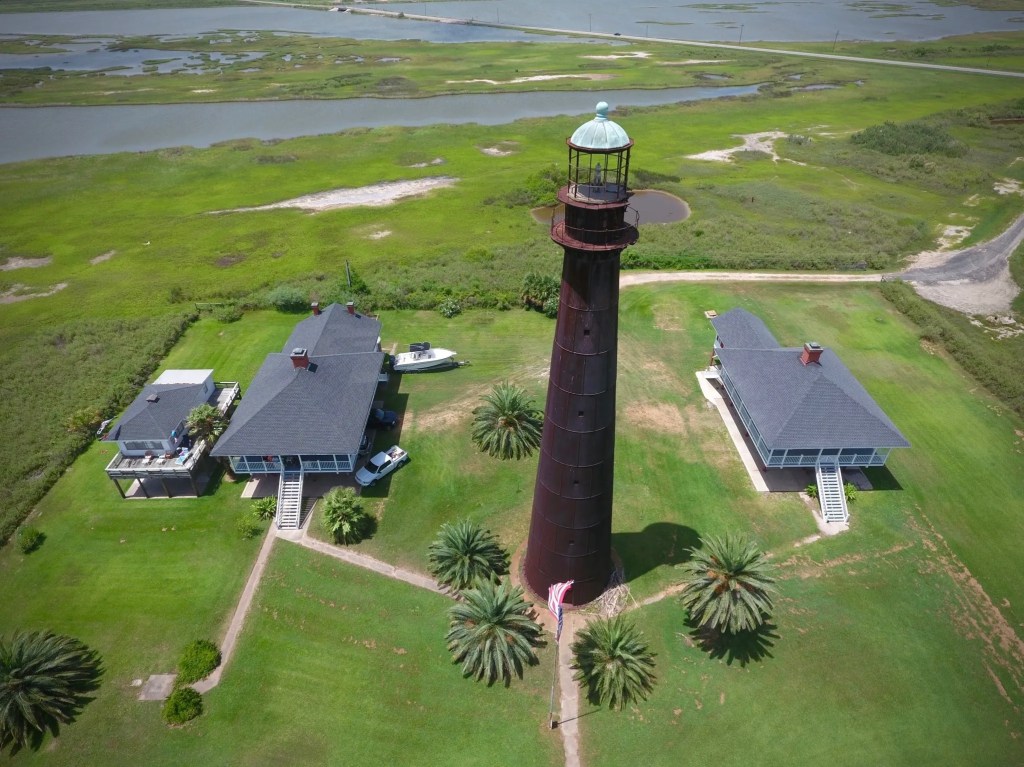
Standing tall since 1872, the Bolivar Point Lighthouse has been a silent witness to history along the Texas Gulf Coast. Today, thanks to the dedicated efforts of the Bolivar Point Lighthouse Foundation, this historic beacon is getting a second chance to shine.
A Legacy of Light and Shelter
Built in the aftermath of the Civil War, the lighthouse represents more than just a navigational aid – it’s a testament to American resilience and ingenuity. The construction itself was a remarkable feat, with materials shipped all the way from New York via a specially constructed pier, as no railroad access existed at the time.
Throughout its active years, the lighthouse served as more than just a beacon for ships. Local lore tells of how it became a sanctuary during devastating hurricanes, with families seeking refuge within its sturdy walls. Though its official light went dark in 1933, the structure’s significance never dimmed in the hearts of local residents.
A Community’s Mission to Preserve History
In 2015, two descendants of the lighthouse’s original private owners – Mark Boyt and Michael Maxwell – established a foundation with the ambitious goal of renovating the historic structure and opening its doors to visitors for the first time. What began as an intimidating undertaking has transformed into a story of community triumph. Mark Boyt of the Bolivar Point Lighthouse Foundation reflects, “When we started it was a daunting task and we didn’t know what we were doing… and now here we are nine years later. We have a plan, we are well underway getting stuff done, and we can see success of this project.”
The restoration efforts have already achieved significant milestones. The deteriorating top section has been carefully removed and stabilized, and local industrial painting companies have stepped forward to complete the exterior painting. Local contractors and craftsmen are leading the restoration work, while the community’s support has been unwavering – evidenced by the fire department’s quick action to relocate the 150th anniversary celebration when needed.
Looking Toward a Bright Future
The foundation’s vision extends beyond mere preservation. Plans are underway to transform the lighthouse into an educational center, offering programs about regional history and environmental features. The goal is to create a self-sustaining landmark through visitor programs, though funding is still needed for the top section reconstruction and interior restoration.
“It’s a stewardship mission for us,” explains Boyt. “The foundation is gonna have control of the lighthouse beyond my lifetime so we’re trying to start off as best we can.” For the communities of the Peninsula, Beaumont, Galveston, and even Houston, this lighthouse represents more than just a historical structure – it’s a symbol of their shared heritage and collective future.
Photos courtesy of the Bolivar Point Lighthouse Foundation.
“Like many lighthouses, Greens Ledge is woven into the fabric of our waterfront seaport community,” said Tim Pettee, President of The Greens Ledge Light Preservation Society.
The lighthouse was built in 1902 with what is known as a spark plug design.
Lighthouses with this design feature have the appearance of a spark plug, with rounded keepers’ quarters and a lantern room placed on top. As was the case with the Greens Ledge Lighthouse, these structures were made from cast iron, built offshore, and placed on solid foundations such as a caisson.
Its location places it at the western entrance of Norwalk Harbor (Norwalk, Connecticut), which contains a very active boating community.
In September 2016, the Greens Ledge Lighthouse was purchased by the Pettee Family at a public auction.
It was then given to The Greens Ledge Light Preservation Society, which was formed in September 2016 with the goal of restoring and preserving the lighthouse.
“We donated it to The Greens Ledge Light Preservation Society of which today I’m president,” Pettee said.
At one point, the National Register of Historic Places classified the structure as deteriorated.
“It’s over 120 years old. And believe me, when we first saw it five or six years ago, it looked every bit 120 years old,” Pettee said.
The society launched the “Save The Light” campaign in 2017 to raise $2 million for the restoration project.
According to Pettee, when starting a project like this, it’s important to include the local community.
“Step one, in my advice to anybody undertaking a project like restoring a lighthouse, make sure the community is on board,” said Pettee.
Pettee described the restoration of the Greens Ledge Lighthouse as a four-step process: acquiring the lighthouse, restoring its structural integrity, and conducting exterior and interior restorations.
Pettee described the work as “gritty and grimy.”
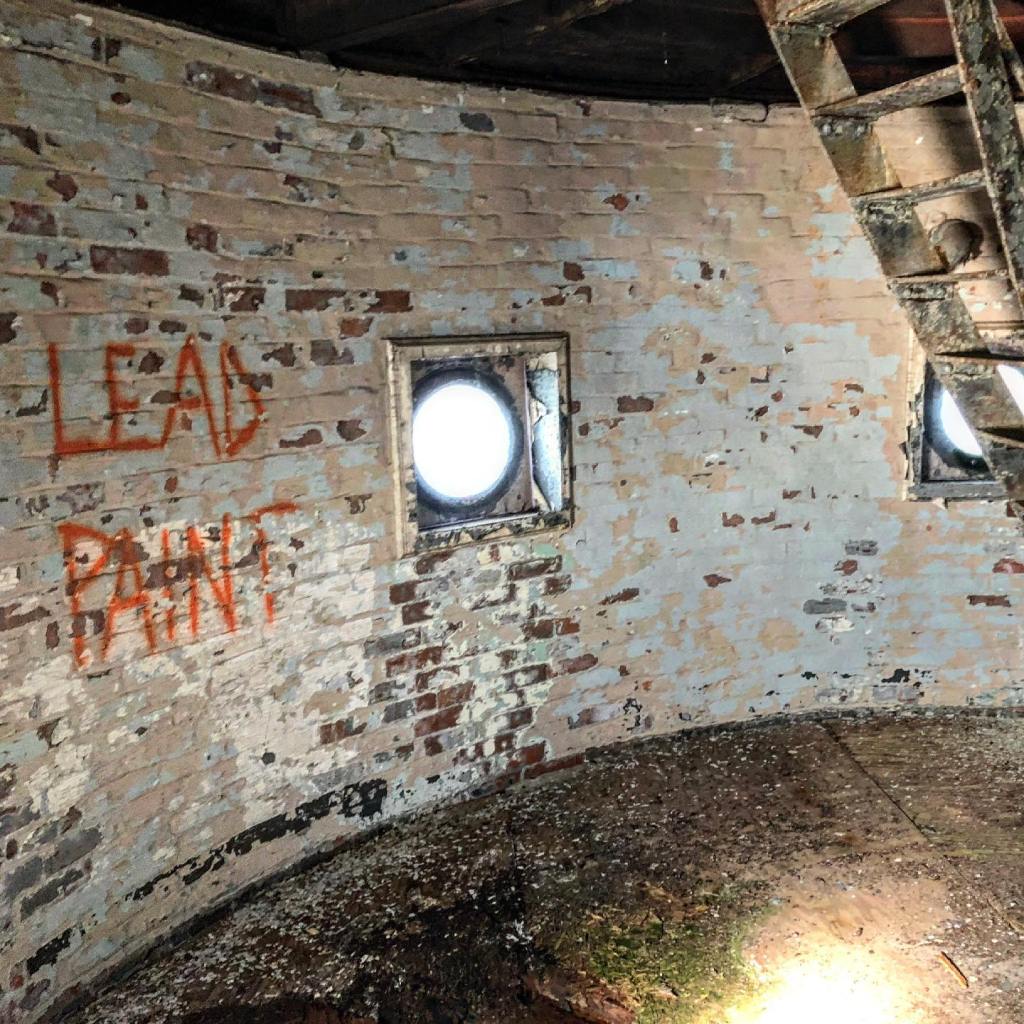
“There was asbestos and lead paint, and nobody would work in there until it had been remediated,” said Pettee.
Photo from Greens Ledge Light Preservation Society
Photo from Greens Ledge Light Preservation Society
The restoration took five years to complete both the exterior and interior, according to Pettee.
Today, the lighthouse is considered fully functional.
It has running water. We have a desalination unit that pumps water in from Long Island Sound and runs it through a reverse osmosis system. This provides water for our kitchen and bathroom facilities, Pettee said.
Listen to hear about the Greens Ledge Lighthouse drinking water
In addition to the running water, the lighthouse runs on a three-kilowatt solar power system.
Listen to hear about the Greens Ledge Lighthouse solar power
”It’s important to note that the Coast Guard still maintains the beacon at the top,” Pettee said. “They also still maintain the foghorn and for that, they use a separate smaller solar array.
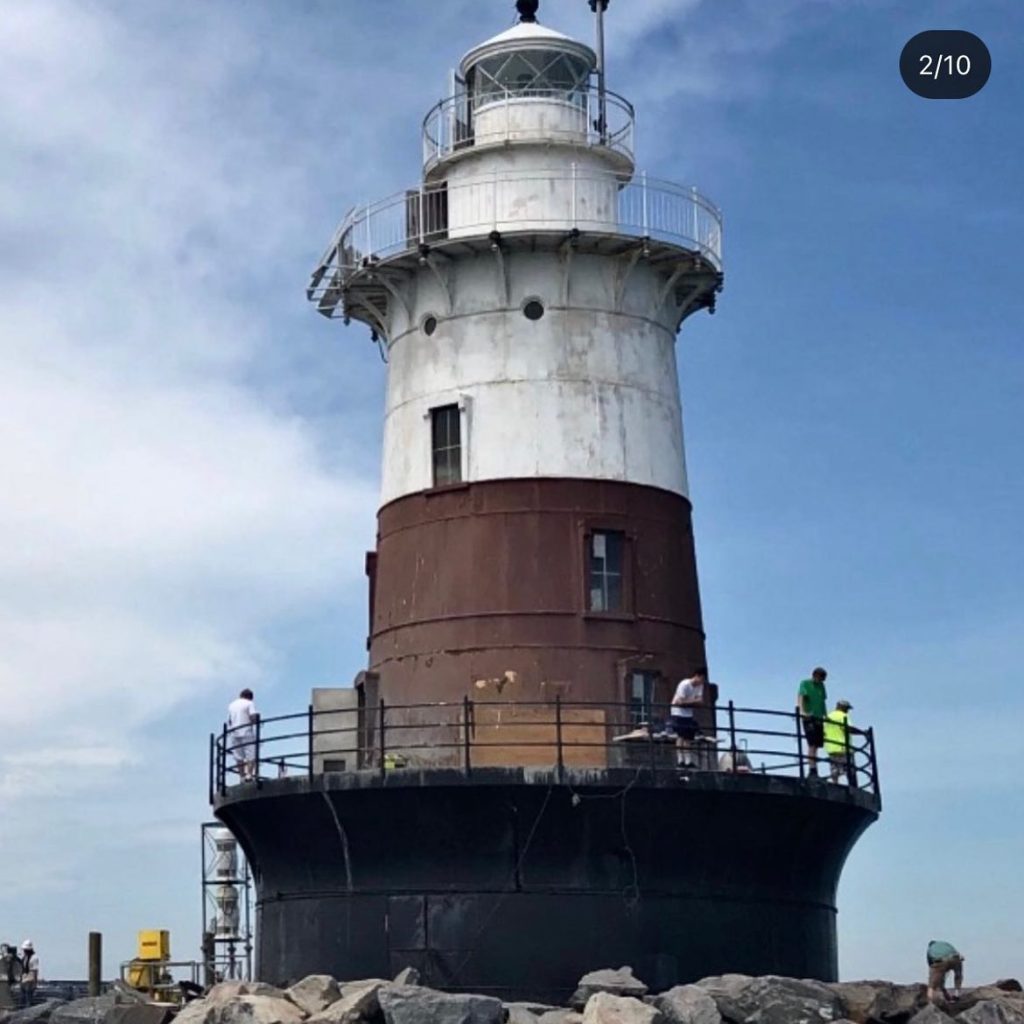
While working on the exterior, the lighthouse was stripped, revealing, as Pettee calls it, “many decades of paint.” According to Pettee, many colors were discovered ranging from orange to gray.
A contest was held to determine the color that would be used to repaint the lighthouse.
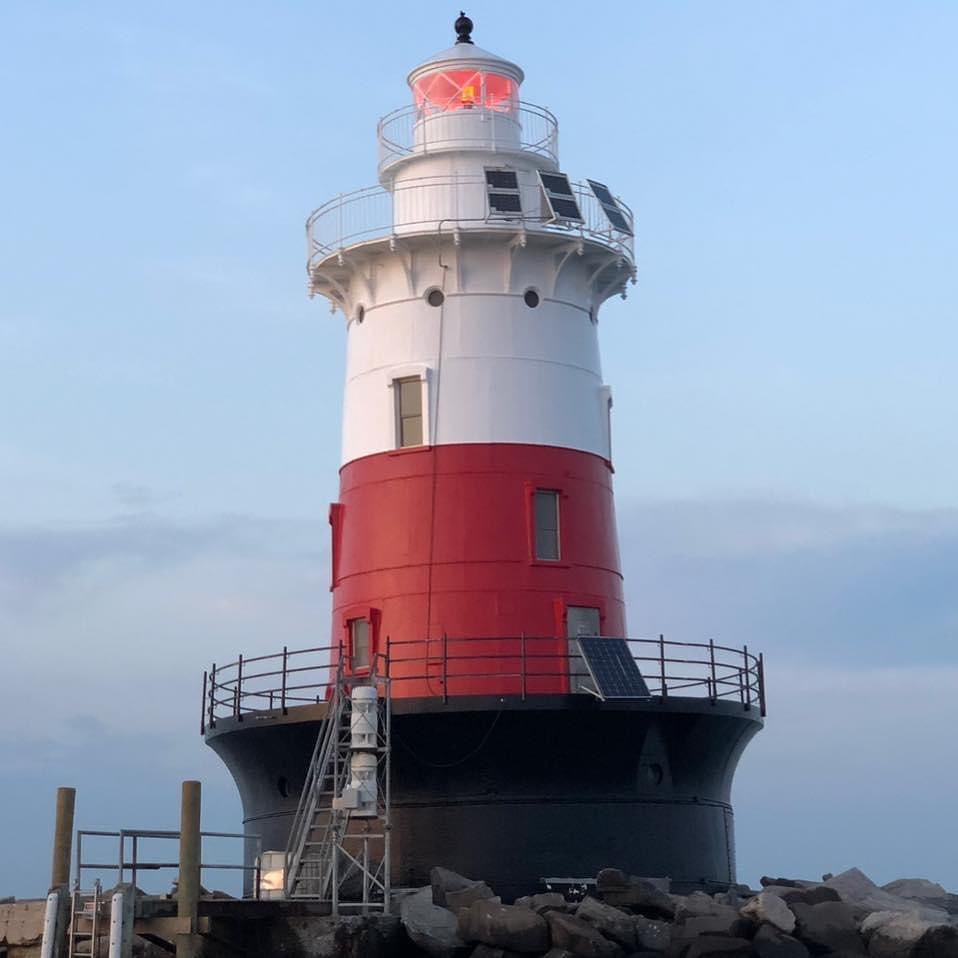
“We knew we were going to use red because it was originally red, you know, back in 1902,” Pettee said.
“When the scaffolding came down, the community lit up,”
Tim Pettee
Since there are different shades of red, the competition included three different shades that people could vote on.
“The winning color was actually bubblegum red, which is very, very close to kind of a traditional Coast Guard red,” Pettee said.
In July 2020, a bubblegum red color was added to the lighthouse, along with a shiny white color at the top.
Photo from Greens Ledge Light Preservation Society
Photo from Greens Ledge Light Preservation Society
According to Pettee, the community’s reaction was positive once the lighthouse exterior was finished.
“When the scaffolding came down, the community lit up,” said Pettee. “Because now people could see, you know, they couldn’t see the metalwork they couldn’t see the asbestos remediation.”
According to Pettee, The society’s fundraising efforts became a lot easier after people could see the positive results of the restoration work.
Despite being a small part of the restoration, the new paint garnered significant support from the community once they could see it.
“Everybody was behind us at that point”, Pettee said.
According to Pettee, The Greens Ledge Lighthouse has long played a role in the environment with wildlife due to the Ospreys that call Greens Ledge home.
Ospreys are large fish-eating birds, also known as fish hawks or sea hawks.
“Ospreys – are very territorial and the male returns every year to the same place,” said Pettee
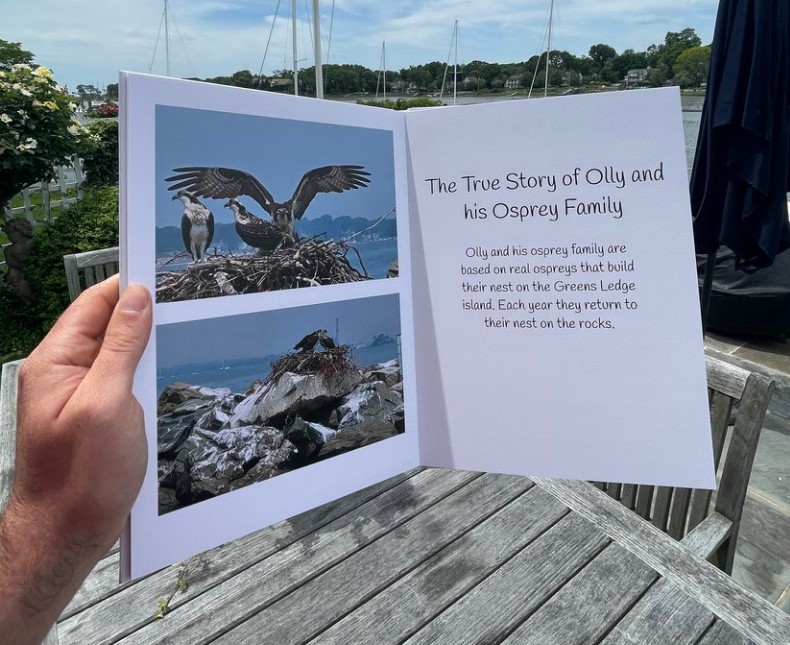
The resident osprey at the Greens Ledge Lighthouse is Olly the Osprey.
Olly has returned every year to produce new offspring.
“One year, I think there were four offspring; last year, was just two,” Pettee said.
“We were pleased that Olly came back a couple of weeks ago and is building the nest.”
Once Olly finds a mate, there will be new offspring ready to leave the nest, maybe in mid-July.
Olly’s presence is so significant that a children’s book was written about him titled “Olly The Osprey.”
Photo from Greens Ledge Light Preservation Society
The society has placed riprap, a rocky material placed along shorelines and shoreline structures to protect from erosion, to prevent turbulent waves from disturbing Olly’s nest.
“We do everything to make sure that Olly is safe,” Pettee said.
Each year in the winter, the nest is eventually washed away due to the storms.
“In the spring and summer when Olly’s there raising his family, it’s not quite as stormy,” Pettee said.
A camera has been placed to keep an eye on Olly and his nest, which is located about 100 feet from the lighthouse tower.
Pettee hopes that the lighthouse can teach visitors about “off-the-grid” living.
Initially, the lighthouse didn’t have electricity until the 1950s and was originally an off-the-grid workplace.
Pettee and the society hope to share the off-the-grid technology with local visitors, particularly school groups.
Pettee and the society plan to share their off-the-grid technology with visitors, especially school groups. One planned exhibit is an LED screen display in the Research and Education Center that shows how much power the sun is generating and how fast the batteries are charging.
Other displays will monitor the water and its filtration process, demonstrating the types of contaminants that need to be filtered out of salt water.
“Believe me, it’s – not like it was in 1920,” Said Pettee. “It’s very high-tech. But the important thing is it’s just as much off the grid today, as it was, you know, in 1920.”
Although the restoration of the lighthouse has been completed, the work of the society still continues.
The society has launched a new campaign called “Next 100 Years,” with a mission to turn the Greens Ledge Lighthouse into a hub for research, education, and sustainability for the local community.
The campaign includes tours, educational programs, community and private events, as well as a focus on the environment and preservation.
“The Greens Ledge Lighthouse will be a platform for Long Island Sound research, whether it be water quality, tidal or other unique aspects to the Long Island Sound Estuary,” Pettee said.
Long Island Sound is Connecticut’s largest natural resource, with over 8 million people living in its watershed. The Sound is home to hundreds of species of fish, birds, and animals, and is a popular spot for boating and fishing.
Research for the Long Island Sound Study is a collaborative effort to protect and improve the health of the Sound by focusing on improving water quality, restoring habitats and wildlife, creating sustainable communities, and utilizing sound science and management.
For years, the Greens Ledge Lighthouse sat with poor maintenance and was off-limits to visitors, said Pettee.
“It’s not a statue anymore,” Pettee said.
Today, people can visit and even stay overnight in the incredible structure.
“Because of the restoration efforts, we think it will be standing for at least another 100 years,” Pettee said.


 The Green Light Blog